
SERIOUS TRAINING 25
An Athlete Ahead of His Time - and an Early Death

I mentioned last week that I’m a history buff—especially the history of training for endurance sport. This week I’ll tell you another tale of how our current-day training came to be. Today’s featured athlete was well ahead of his time. Despite his racing peak being around 70 years ago, we can still learn a lot from giants like him. Much of how we train today comes from those athletes who came before us. The following is about 1 of them.
In SERIOUS TRAINING 24 article last week I described the training of perhaps the hardest working elite endurance athlete of all time—the runner Emil Zátopek. We could certainly make the case that while he trained for long-distance running obsessively, he was highly successful. He was at the top of his sport for nearly a decade. Looking back, it’s clear that his focus was on what we now call “durability”—the capacity to maintain a relatively high output while his competition was fading due to fatigue. This paid off especially well for long races such as marathons.
This week I’d like to explore the training methodology of a cyclist who is well known in the history of sport, but to whom we do not give enough credit for his way of training.
The Italian Fausto Coppi was ahead of his time. But I still wouldn’t say he was the greatest rider of all time although he comes close. He won the Giro d’Italia 5 times over a 14-year period and the Tour de France twice. And he was the first to win both Grand Tours in the same year. Add to that his World Championship win in 1953 and setting a world hour record that remained unbroken for 14 years. These were all remarkable accomplishments. But there was a more accomplished cyclist.
The title of most accomplished goes to Eddie Merckx—or possibly Tadej Pogačar. The latter is still building his reputation in the early stages of an amazing career. With him we are watching cycling history as it’s being made. Only time will tell if he unseats Merckx as cycling’s GOAT. But this is an entirely different matter.
Like Zátopek, his running contemporary, Coppi also raced in the immediate post-World War II era. He trained in his own way, most of which was unusual for his time.
But not all was unique. Some of what he did was quite traditional. What he had in common with other professional cyclists of his era was a fondness for putting in a tremendous amount of saddle time. This is still common today. But otherwise, his training went well beyond that of his contemporaries.
When it comes to on-the-bike training, Coppi was ahead of his time in many ways. He still serves as a good model for how endurance athletes across the sport spectrum should train today.
What can we learn about serious training from Fausto Coppi?
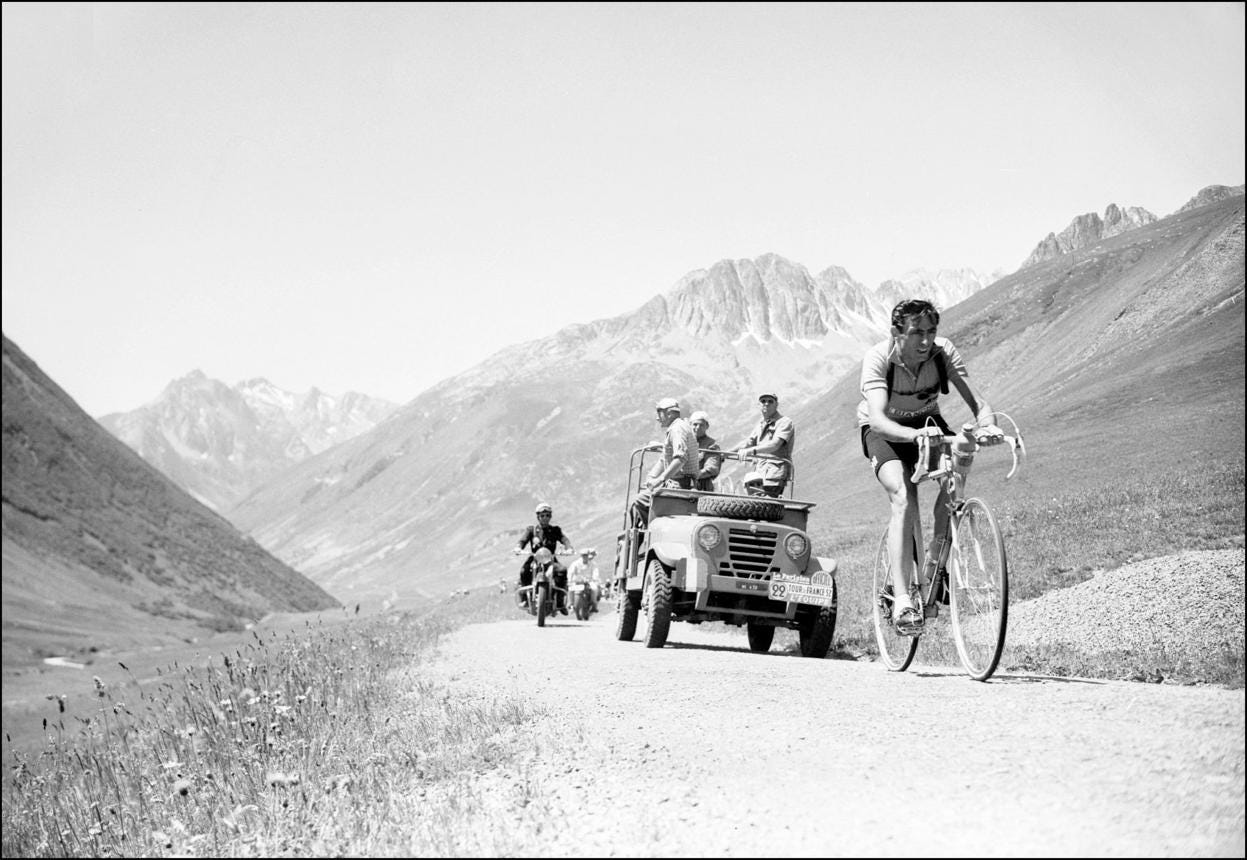
Fausto Coppi
