
SERIOUS TRAINING 24
The Hardest-Training Endurance Athlete of All Time?

In my undergrad days in college, I had a double major—physical education and history. I’m still quite interested in both. When they’re combined—the history of sport—I’m fascinated. How and why we workout as we do now have a lot to do with how athletes who came before us trained. This week I want to look back at one of those athletes—and what we can learn from him.
My college track coach had a favorite workout. We would do it 4-5 days each week (nobody trained on the weekends in the early 1960s). It was simple—440-yard (all US tracks were in yards back then) intervals. There would be a long, leisurely warm-up. Then everyone from sprinters to milers would report to the coach who sat in the stands with a Coke in one hand and a stopwatch in the other. We knew what was next without being told.
He came down from the stands and drew a line on the cinder track with his foot (no nice, all-weather tracks back then). That was the start and finish line. Then he’d blow the whistle and start his big watch. Noone had timing devices other than the coach. This was years before stopwatches were built into a wristwatches.
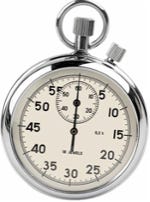
There was no mention of goal 440-interval times. We were to just run as fast as we could. He never told us how many 440s we were going to do. It could be 8. It could be 28. There was no set recovery time between the 440s. Whenever he felt like it, we’d start again. We ran 440s until the coach got tired of watching. Something we learned early each season was to find someone who could toss his (there were no women in sport then) lunch after a few 440s. We knew that if this kept happening coach would eventually feel sorry for the lunch-tosser and say, “Just one more.”
The only feedback coach gave us during this sufferfest was that we “needed to run faster” –and that we were sissies and crybabies.
That was cutting-edge coaching methodology 60-some years ago. We’ve come a long way.
Don’t get me wrong—the coach wasn’t a bad guy. Track and field just wasn’t his thing. His passion was coaching basketball—which our school excelled at. It was in Indiana, after all. He was just filling in as the track coach until the school found someone else. That didn’t happen during my years there.
Looking back at the “punishment,” it’s amazing I continued running after college.
Those quarter-mile intervals were remarkably popular at the time. We never did 220s, 660s, 880s, or any other distance. Quarter miles only. Why 440s? It all comes down to a very successful runner in the 1940s and 1950s who my coach and others were aware of, admired, and adopted his methodology. Not only was his interval distance popular but also his mindset. He was a role model for all endurance athletes for a couple of decades following his very successful career. There are still athletes in endurance sports who train and push themselves to do more as this athlete did back then.
Who was he, how did he train, and are there lessons to be learned here?
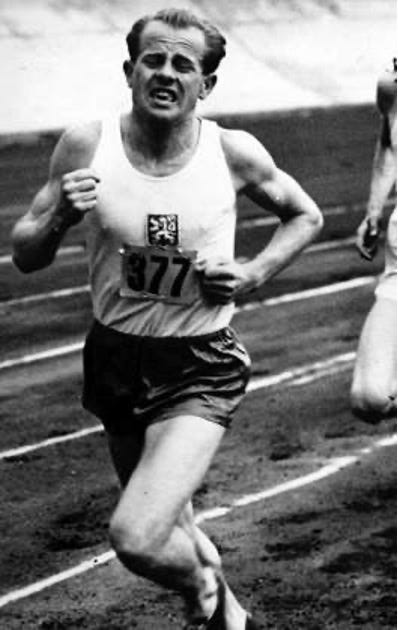
Emil Zátopek
