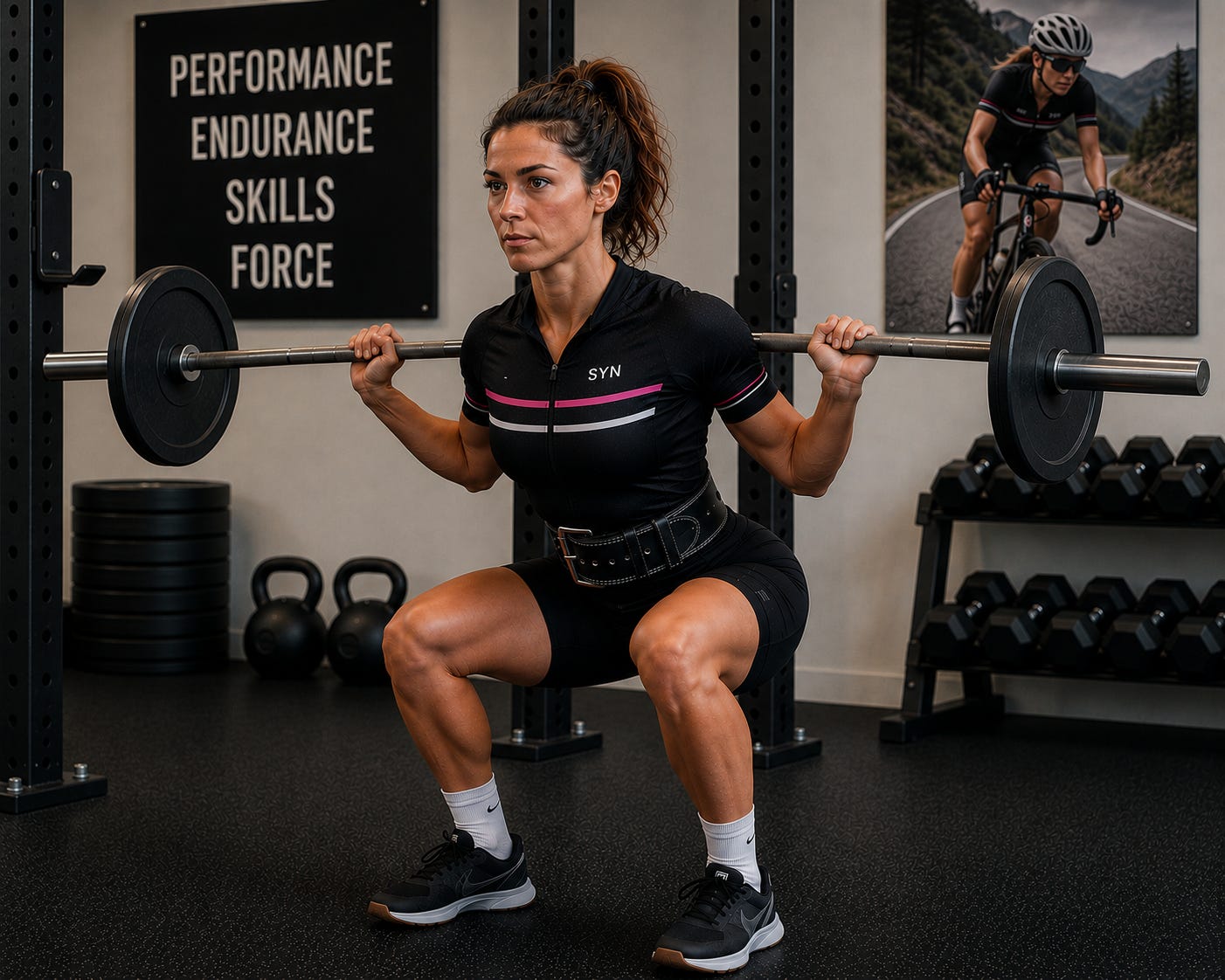
I’ve been preaching the importance of strength training for endurance athletes for more than 40 years. Until the 2010s, I got a lot of pushback from coaches and athletes who thought that gym training on top of endurance training was simply too much. They thought it would create excessive fatigue while also making athletes too bulky to race well.
I’m pleased to tell you that neither of those things has happened. In fact, most of today’s top elite endurance athletes, regardless of sport, now include the gym in their programs. Strength building has become a standard component of endurance training. There’s no longer any pushback.
Why is increasing strength (I call this “force”) beneficial for endurance athletes? For serious endurance athletes, force training improves the ability to produce and tolerate high force in training and racing without requiring more endurance training volume. It strengthens the foundation that allows the endurance system to work more effectively.
Will you become bulky by doing force training in the gym? No. As an endurance athlete force work is not about bodybuilding or even muscle size. It’s about improving endurance performance by training in a unique way. You won’t become bulky because you don’t train, eat, or even recover like a bodybuilder.
Muscle hypertrophy (growth in muscle size) requires a very specific combination of training, nutrition, and recovery that most endurance athletes never achieve, and, in fact, actively avoid. Muscular force is not the same as muscle size. There are three related, but distinct adaptations associated with strength training:
Neural adaptations—the nervous system becomes better at recruiting muscle fibers
Strength gains—greater force production
Muscle hypertrophy—larger muscles
Endurance athletes focus only on the first two. During the first several weeks of force training, most improvements come from the nervous system learning to use existing muscle more effectively. Athletes become stronger with little change in muscle size.
Furthermore, endurance training—the primary and obvious focus of the endurance athlete—suppresses muscle growth. Many hours of endurance training each week create what researchers call the interference effect: endurance training limits the extent of muscle growth even when force training involves lifting heavy weights. Because of this, an endurance athlete training many hours each week is unlikely to gain substantial muscle mass, even with heavy lifting.
Endurance athletes also don’t train like bodybuilders. Bodybuilders typically use moderate loads, high training volume, several exercises for each muscle group, lift to muscular failure, and take short rest intervals. Endurance athletes lift heavy loads with few repetitions, very few sets, long recoveries between sets, and generally only two sessions each week. Their emphasis is on maximal force, not maximal fatigue. In fact, endurance athletes try to avoid fatigue in the gym because it can compromise subsequent endurance workouts.
Why is force training important for serious endurance athletes?