SERIOUS TRAINING 14
Measure What Matters—The Base Period

In the TrainingPeaks app, there are 20 or more daily workout metrics, depending on your sport and the devices you use. These metrics appear on the “Analyze” page after posting your workout. Each one provides insight into how your recent workout went. But with so many metrics, which should you focus on?
With so much data it’s easy to get caught up in analysis rather than training. The numbers can quickly become overwhelming.
The key is understanding what really matters.
Given your sport, event, goals, abilities, and limiters, only a few metrics are truly critical. These are the ones you should focus on after each session. Ideally, narrow your post-workout review down to just a couple of metrics for each training period. While it’s fine to glance at the other data, too much attention to all the numbers can be distracting and could even lead you to pursue goals that aren’t aligned with your long-term objectives. Fixing something irrelevant is a waste of time.
But which one or two metrics should you prioritize? What really matters?
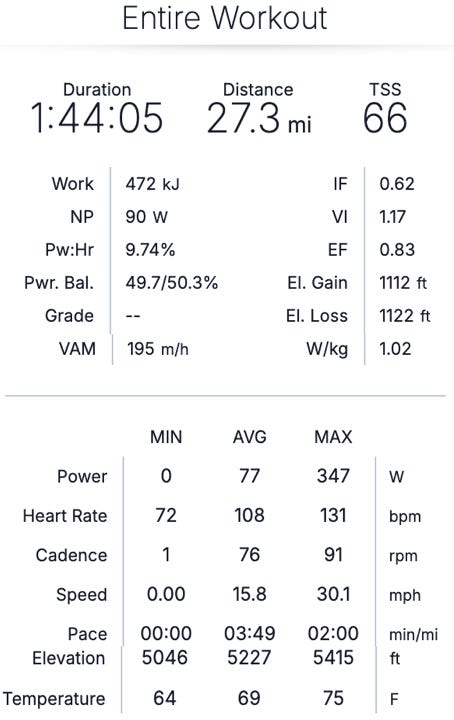
Let’s look at a real athlete’s TrainingPeaks Analyze page and see what’s truly important. In this article, I’ll focus on one of the most critical metrics during the Base period—aerobic endurance. In next week’s article, I’ll explore the key metrics during the Build period.
First, let’s review what aerobic endurance training is.
In last week’s post, I shared how super-triathlete Mark Allen improved his aerobic endurance by consistently running and cycling at a very low heart rate throughout his Base. Without ever reaching higher intensity zones (3, 4, or 5), he managed to lower his run pace from 8:15 per mile to 5:20 over several weeks. That’s a 35% improvement, with no high-intensity training. This is a textbook example of how aerobic endurance training works at its best.
To better understand what aerobic endurance is and how it can be tracked, let’s examine a real athlete’s data from a workout.